
Can a Clothing Brand Ever Be 100% Sustainable?
If you've spent any time looking into sustainable fashion, you've probably come across brands claiming to be eco-friendly, ethical, planet positive, or even 100% sustainable.
It sounds reassuring. But after spending the last year researching fabrics, manufacturers, dye houses, trims, and garment construction while building LESNORM, I've come to a different conclusion.
I don't believe a clothing brand can be 100% sustainable. Not today. That isn't because brands don't care. It's because making clothing is full of trade-offs, and many of those trade-offs don't have perfect solutions yet. The question isn't whether a brand is perfect. The better question is whether it's making better decisions wherever it can.
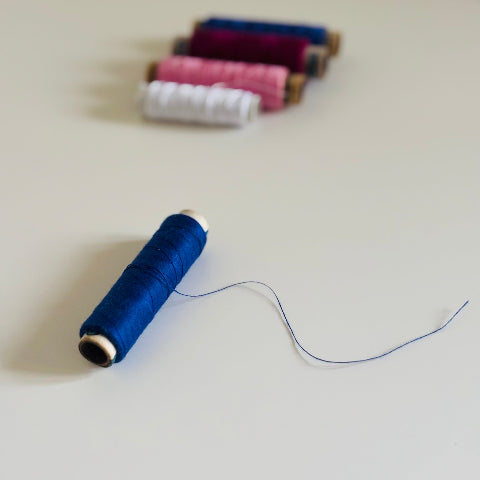
The Thread Holding Everything Together
Take something as simple as sewing thread. Most people never think about it. I certainly didn't. You can make a dress from organic cotton or Lyocell. You can use certified low-impact dyes. You can manufacture in small batches. And then you'll probably sew the entire garment together with polyester thread.
At first, that felt contradictory. Shouldn't a sustainable garment use cotton thread? The reality is more complicated. Polyester thread is stronger. It withstands repeated washing, resists abrasion, and is less likely to break over years of wear. Cotton thread has its place, but for many garments, it simply doesn't provide the same durability.
Ironically, using a stronger synthetic thread can help a garment last much longer. And garments that last are generally more sustainable than garments that need replacing.
Stretch Comes With a Compromise
Elastic is another example. Whether it's hidden inside a waistband, used for shirring, or stitched into a sleeve cuff, elastic almost always contains synthetic materials.
Today, there simply isn't a widely available natural alternative that delivers the same stretch, recovery, and longevity. You could avoid elastic altogether, but that would also limit comfort, fit, and the kinds of garments you can create.
Even the Zipper Isn't Simple
Zippers are another reminder that sustainability isn't black and white. Most quality invisible zippers use polyester tape with plastic teeth or coils. Metal zippers exist, but they're not suitable for every design.
Again, it's a compromise between function, durability, and available materials.
Natural Fibers & The Journey
Natural Doesn't Always Mean Better. This was one of the biggest lessons I learned. It's tempting to think that if something is natural, it must automatically be the more sustainable option. But that's not always true.
Natural dyes, for example, can be beautiful. Depending on the colour and process, though, they may fade more quickly, require larger quantities of water, or be difficult to reproduce consistently. Likewise, recycled materials aren't automatically better than virgin ones.
Organic doesn't always mean ethical. Local doesn't always mean lower impact. Every choice has context. And that's exactly what makes sustainability so complicated.
Even if every material in a garment were perfect, it still has to travel. Fabric moves from a mill to a dye house. Then to a manufacturer. Then to a warehouse. Finally, to your doorstep.
Every journey has an environmental footprint. There isn't a magic way around that.
The Garment You Wear Matters More Than the One You Buy
Perhaps the most important lesson isn't about materials at all. It's about longevity.
A well-made garment that's worn for years is almost always better than one that ends up forgotten after a handful of wears. Quality matters. Construction matters. Fit matters. Care matters.
A garment's environmental impact isn't determined only when it's made. It's also shaped by how long it stays in your wardrobe.
Maybe We're Asking the Wrong Question
Instead of asking, "Is this brand 100% sustainable?" perhaps we should ask, "When faced with difficult choices, did this brand consistently choose the better option?"
Perfection isn't available to the fashion industry today. Progress is. And for now, that feels like the more honest goal.
Read more

When LESNORM existed only as an idea, I travelled to Vietnam looking for inspiration. I wanted to understand clothing beyond the store shelf, starting with the ancient art of natural indigo dyeing....
Read more